.webp)
'No hawker eviction this month', orders Calcutta HC in Raliway land encroachment case
.gif)

Download Mobile App 






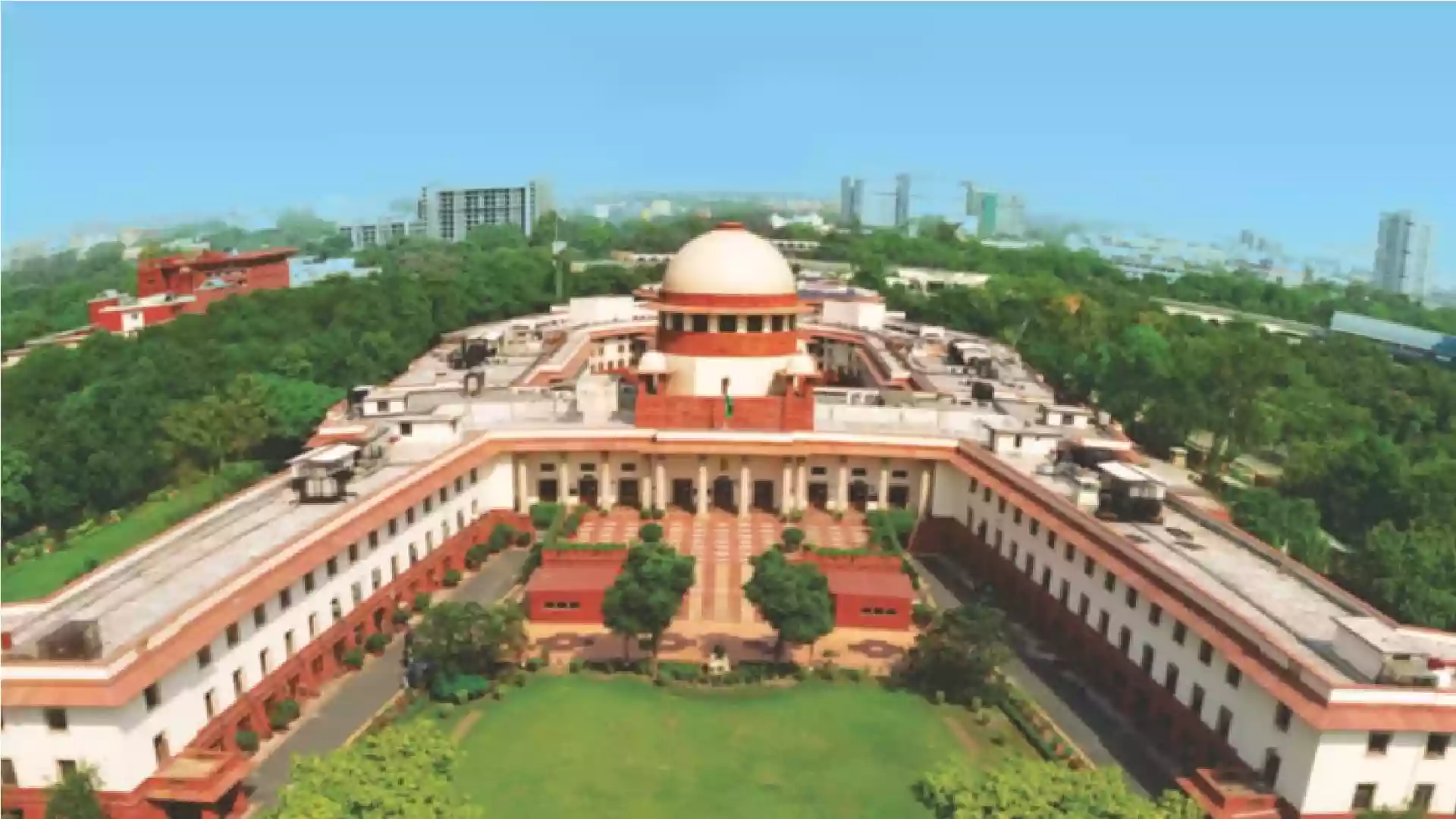
In the hallowed halls of the Supreme Court, where the weight of the nation's justice rests on 34 judges' shoulders, a candid courtroom confession cut through the procedural hum on, as Justice B.V. Nagarathna—known for her incisive intellect and unyielding empathy—lamented that the apex court has morphed into a "bail court," drowning in a deluge of liberty pleas that leave benches breathless and lunches forsaken amid marathon hearings of 25 bail matters in a single session. Her words, laced with exhaustion and a call for systemic soul-searching, emerged during a routine miscellaneous day docket, where the bench—comprising Justices Nagarathna and Augustine George Masih—grappled with yet another wave of applications, prompting her to quip to Senior Advocate Gopal Sankaranarayanan, "One after the other we are considering either granting or refusing bail... The Supreme Court has become a bail court."
This wasn't mere judicial griping; it was a spotlight on a swelling crisis, where rising crime rates funnel routine bail bids upward after lower courts balk, turning the SC into a reluctant revolving door for the detained, with implications rippling from clogged calendars to eroded public trust in a judiciary stretched thinner than a monsoon thread. As Sankaranarayanan thanked the bench for squeezing in lunch breaks—a rarity in such frenzy—Nagarathna's retort underscored the human toll: "Can't continue like that without lunch because we are exhausting ourselves only granting bail." In an era where personal liberty hangs by procedural hairs, her plea resonates as a wake-up for reforms that could reclaim the court's constitutional core.
The spark for this stark observation flickered during a seemingly innocuous exchange, as the bench powered through 19 bail pleas the previous day and 25 more on the fateful Friday, a rhythm that has become the SC's reluctant refrain. Sankaranarayanan, a seasoned silk with a knack for navigating the court's corridors, paused amid the pleas to express gratitude for the "lunchtime largesse" on miscellaneous days, a small mercy in the grind. Justice Nagarathna, seizing the moment, peeled back the procedural veil to reveal the personal pinch: her journey from Karnataka High Court, where she never touched bail benches, to the SC's frontlines had been a baptism by repetitive fire. "I had to learn the work after coming here," she shared, a confession that humanized the high office, illustrating how the apex's vantage—post-investigation, post-charge-sheet, with accused languishing for years—often tips scales toward release, unlike lower courts' frontline fears. This disparity, she implied, breeds the backlog: trial judges, haunted by backlash, deny bails that the SC later deems undue, funneling 30% of dockets to Delhi's doors, per earlier judicial tallies.Echoing a chorus of apex angst, Nagarathna's nudge aligns with predecessors' pleas—Justice B.R. Gavai's March 2024 moan of 15-20 daily bail bites per bench, or Justice Sanjay Kishan Kaul's 2023 alarm that a third of cases were liberty lotteries—yet her voice adds urgency, tying the tide to societal swells: "Crime is on the rise," she noted, urging a "judicial impact assessment" to gauge how urban unrest and enforcement eddies overload the system.
The bench's recent directive to expedite bail apps at trial and high court levels, stressing delays' dent on Article 21's life and liberty, underscores the stakes: prolonged pre-trial pokes erode rights, turning custody into cruel conjecture. Sankaranarayanan amplified the appeal, suggesting lower courts be "encouraged" to grant bails sans specter of scrutiny, a nudge toward a cultural shift where fear doesn't freeze fairness. In this conversational courtroom, the dialogue danced between despair and direction, a rare breather in the bail ballet that left lawyers lingering on the larger labyrinth.For the faceless figures in the fray—the undertrials whose fates fuel the flood—this overload isn't abstract; it's an agonizing limbo, where months morph to years in dim cells, families fraying at the edges while verdicts vacillate.
Justice Nagarathna's empathy, honed from her high court days, paints the peril: by SC arrival, the accused has weathered investigation's storm, charge-sheet's chill, and trial's tease, tilting the balance toward temporary freedom. Yet, the irony bites: this "bail court" tag, while granting gasps of air to the jailed, starves the substantive—landmark litigations on rights, environment, equality—languishing in the queue. Stakeholders from bar associations to rights watchdogs nod vigorously: the SC's 80,000-pendency pile, with bails bloating 25% annually per NJDG data, demands decongestants like specialized tribunals or AI-assisted triage, lest the court's constitutional compass spins solely on shackles.Broader ripples reach the reform rapids: Nagarathna's call for impact audits invites a mirror to the machinery—how legislative lags and prosecutorial piles propel pleas upward, a vicious vortex where high courts, handling 40% of bail bids, pass the buck amid their own 4-crore caseload crush. Suggestions simmer: mandatory timelines for lower liberations, judicial exchanges to demystify apex angles, or a "bail fast-track" portal blending tech with tenacity.
Sankaranarayanan's subtle prod—that SC grants underscore lower hesitance—hints at training tonics: workshops whispering "bail is rule, jail exception," as enshrined in precedents like Arnesh Kumar. As the bench rose, sans sweeping orders but with seeds sown, the session symbolized the SC's self-reflection—a judiciary judging its juggernaut, striving to balance the scales before the bail beam bends them.This frankness from Justice Nagarathna isn't a solo soliloquy but a symphony starter, harmonizing with the court's quiet quest for equilibrium: fewer bails mean more benches for the bedrock battles that define democracy. For litigants large and small, it's a hopeful hum— that even in exhaustion, the apex aspires to aspiration, reclaiming its role as rights' rampart, not routine's recycler. As Delhi's dusk draped the court in gold, her words lingered like a lantern: in the grind of grants and refusals, the real release is reform, freeing the fountainhead to flow toward justice's fuller flood.





.webp)



 West Bengal
 Bihar
Bihar Uttar Pradesh
 Jharkhand